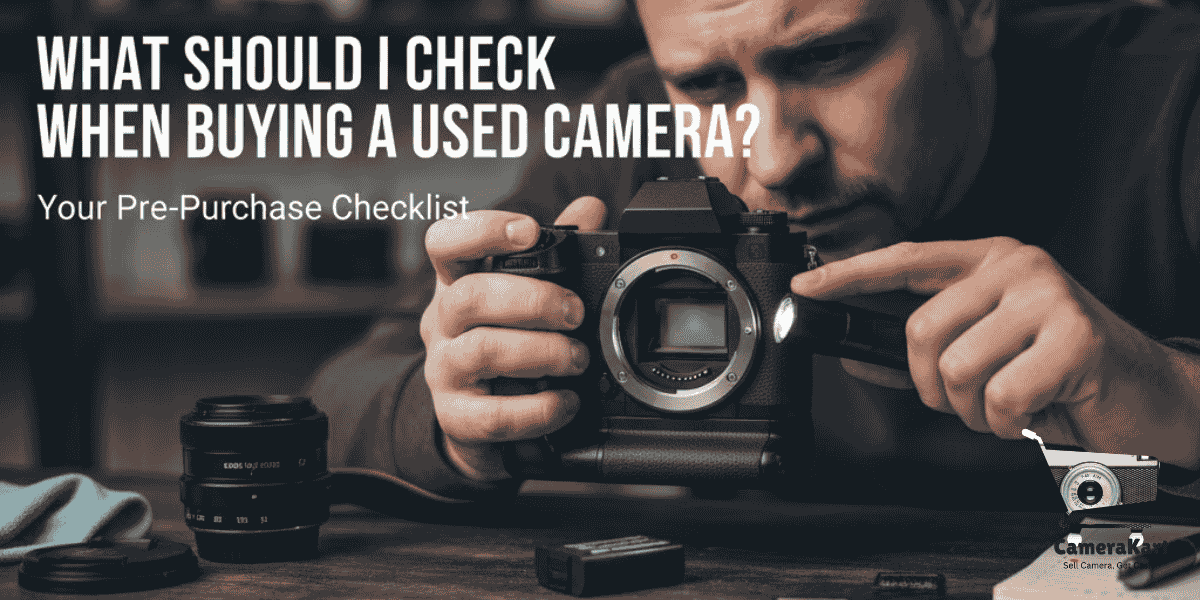
The purchase of a second-hand camera is among the best methods to cut costs and nevertheless get top quality equipment for photography. If you’re looking to upgrade to a Full-frame, mirrorless or DSLR used camera, these cameras typically offer excellent performance when you know what you’re looking for.
Prior to making a purchase, you should follow this checklist to guide you through the process of inspecting and judging a second-hand camera with the same accuracy as a professional.
1. Verify the Shutter Count.
Its number of shutters shows how many images the camera took like the mileage of a car.
- Lower numbers (under 50k for DSLRs) typically indicate low usage.
- A high number of shutters means that cameras are close to needing a shutter substitute.
You can see this information in the camera’s menu or by uploading an image from a trial image on an online shutter count site.
2. Examine for damage from the outside.
Take a good glance at the camera’s body. Look for
- The corners are damaged or scratch marks (signs of falls and poor handling).
- Grips with rubber that don’t fit (a regular issue with earlier models).
- Scratches on screen or buttons that are worn.
Wear and tear is common, however, major damage to the outside may indicate internal problems.
3. Check the Sensor as well as Internal Components
Get rid of the cap on the cover of the body and inspect the inside.
- Find scratch marks on the sensor dirt, dust or oil marks.
- Examine your mirror as well as the focusing screens (for DSLRs) -The screens should be in good condition and unharmed.
- Check lenses’ contacts for signs of dirt and corrosion which could affect the contact between the lens and the body.
If it is possible, point your camera toward a clear wall or blue sky then take the trial shot using a smaller aperture (like the f/16 aperture). Zoom into the picture to identify problems with sensors or dust.
4. The History of the Review Camera and Use
Find out from the seller the way the camera was used as a personal interest, for rent use, or even commercial use? A camera that was used predominantly for rentals or major occasions could have greater wear. Get receipts, the original packaging, and service records, if they are available. This will help confirm that the camera was properly maintained.
5. Purchase from a reputable seller
Make sure you purchase from a trustworthy seller or a verified marketplace like CameraKart.in This ensures a high-quality checking and transparency of product specifications.
Avoid random Marketplace listings with no specific return policy or test alternatives.
6. Make sure you check the warranty and return options.
Certain retailers (like MPB, or stores that are certified used) have a limited guarantee or time-frames for return for used equipment.
Even if you purchase locally, make sure to make sure you have a written assurance that the camera will function according to the specifications.
7. Learn about what Service and Maintenance Costs
Before signing the agreement, determine what the cost of service could be on the model you’re considering, especially in the case of an old DSLR or mirrorless model.
A simple sensor cleaning could cost you a few dollars however major repairs such as shutter replacements may cost more.
8. Check Everything In Person (If it’s possible)
Take your memory card and lens in order to check the camera.
- Verify autofocus speed and precision.
- Check burst mode test as well as video recording.
- Examine all the Menu buttons or dials as well as display brightness.
A hand-on examination technique can reveal more about a listing than any description.
Final Thoughts
A used camera purchase isn’t a risk. You just have to follow an appropriate checklist and a trustworthy source. Through a thorough examination of the number of shutters, the condition of the sensor and any external damage as well as purchasing from a reliable seller such as CameraKart.in it is possible to locate top-quality photography gear for sale for a fraction of cost.
Leave a Reply