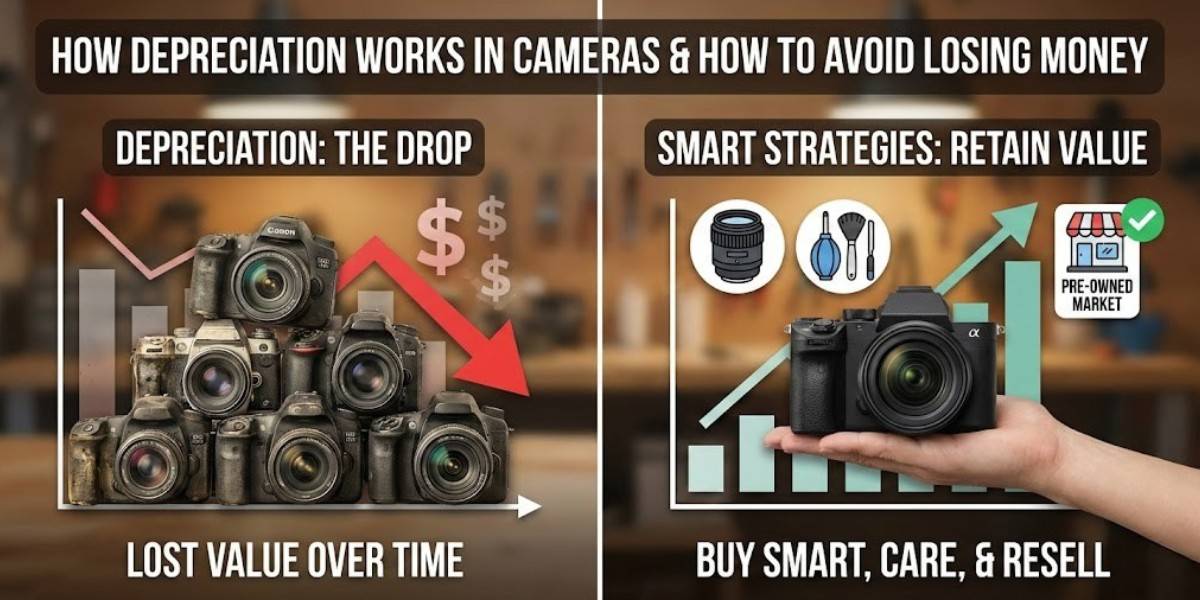
Camera equipment is thrilling to purchase, but like all technologies is devalued as time passes. The loss of value known as photography equipment depreciation. No matter if you’re an experienced photographer or content writer or just a casual hobbyist, knowing the process of depreciation for cameras can help you make better purchasing and selling decisions, and prevent loss of money.
In this article we’ll explain the process of depreciating cameras into simple terms as well as explain how to depreciate, as well as demonstrate how you can minimize losses by selling at the appropriate time with trusted platforms such as CameraKart.
What is Camera Depreciation?
Camera depreciation life is the amount of value a camera will lose when it gets older and utilized. Cameras are classified as capital assets and they lose value gradually because of:
- New model launches
- Wear and tear
- Technology advancements
- Reduced market demand
As time passes, your equipment will become depreciated photography equipment even though it is still working flawlessly.
The useful life of a Camera
The useful life of a camera depends on the use and the type of camera:
- Cameras for entry-level use: 3-5 years
- Professional cameras 5 years or more
- Lenses range from 8 to 15 years (depreciate faster)
This can affect both the value of resales and depreciation in accounting.
Common Methods for Depreciating Cameras (Explained In Simple Terms)
If you are using your camera for business purposes, depreciation can be measured in writing.
1. Straight-Line Depreciation
This method distributes costs evenly throughout the life of the camera.
Example:
Original cost: Rs.10,00,000.
Life expectancy 5 Years
Depreciation annually of $20,000
Simple and widely utilized.
2. Double Declining Depreciation
This technique degrades the camera more quickly in the beginning.
It is used to:
- Technology is quickly outdated
- New models are launched often
This is due to the fact that cameras are less valuable in the first 2 years.
3. units of production depreciation
The method relies upon usage (like shutter counts).
Example:
- Shutter-based depreciation
- Ideal for heavy-duty professional use
It closely mirrors real-world camera wear.
Key Terms of Depreciation You Must Be Educated About
- The original cost – What you incurred at the beginning
- Salvage price Value to be expected at the end of a useful life
- Book value – Original cost minus depreciation
- Depreciable equipment for photography Equipment used to earn income
These terms will help you understand the real value of a camera in the long run.
Is Photography Equipment Depreciable for Business?
Yes. Is photography equipment depreciable?
If the camera is being employed for business or professional reasons, depreciation could be applicable according toIRS depreciation rules and local tax laws.
This is part of:
- Business use depreciation
- Fixed Asset Management
- Tracking depreciation
Many professionals utilize the fixed asset management platform or depreciation tracking solution like AssetPanda platform for managing camera equipment.
How to Calculate the Depreciation of Cameras (Quick method)
To track depreciation manually:
- Note the original cost
- Estimate useful life
- Subtract the expected salvage value
- Divide the remaining value over the course of the course of
However, the value of resales on the market is often lower than that of depreciation in accounting.
How to avoid losing money on camera depreciation
Here’s how skilled photographers can reduce loss:
1. Sell before a major drop in value
Cameras are most valuable over the first two years. Selling prior to a new model is launched helps to protect its resale value.
2. Make sure your gear is well maintained
Good condition slows depreciation:
- Make sure you clean frequently
- Guard against the elements
- Do not make repairs that aren’t necessary.
3. Store boxes and other items
Original packaging boosts confidence in resales and also the price.
4. Monitor Demand for Markets
Mirrorless developments and video features impact the speed of resales. Stay informed.
5. Sell on the right Platform
A market that is geared towards photography such as CameraKart can help you obtain an honest market price from buyers who are aware of the value of their camera, and can help reduce losses due to depreciation.
Depreciation vs Real Resale Value
Resale value and accounting depreciation are not the same thing.
- Accounting: Predictable, slow
- Market value: Demand-driven, fast-changing
Knowing these two aspects will help you determine when to sell instead of storing gear for too long.
The Final Words
Camera depreciation is inevitable. However, losing money isn’t. If you are aware of the methods used to depreciate, monitoring the value of your equipment, keeping it in good condition, and selling it at the right moment, you can safeguard your investment.
The equipment you use for photography should benefit you, not drain your cash. A good timing strategy and a suitable selling platform can make all the difference.